
As the Nordic Council of Ministers’ Office in Latvia approaches its 35th anniversary in 2026, the focus of Nordic-Baltic cooperation has shifted. Established in 1991 to support democratic governance, the Nordic-Latvian relationship has evolved from guidance into a partnership among like-mined countries, particularly visible in the field of energy security and renewables.
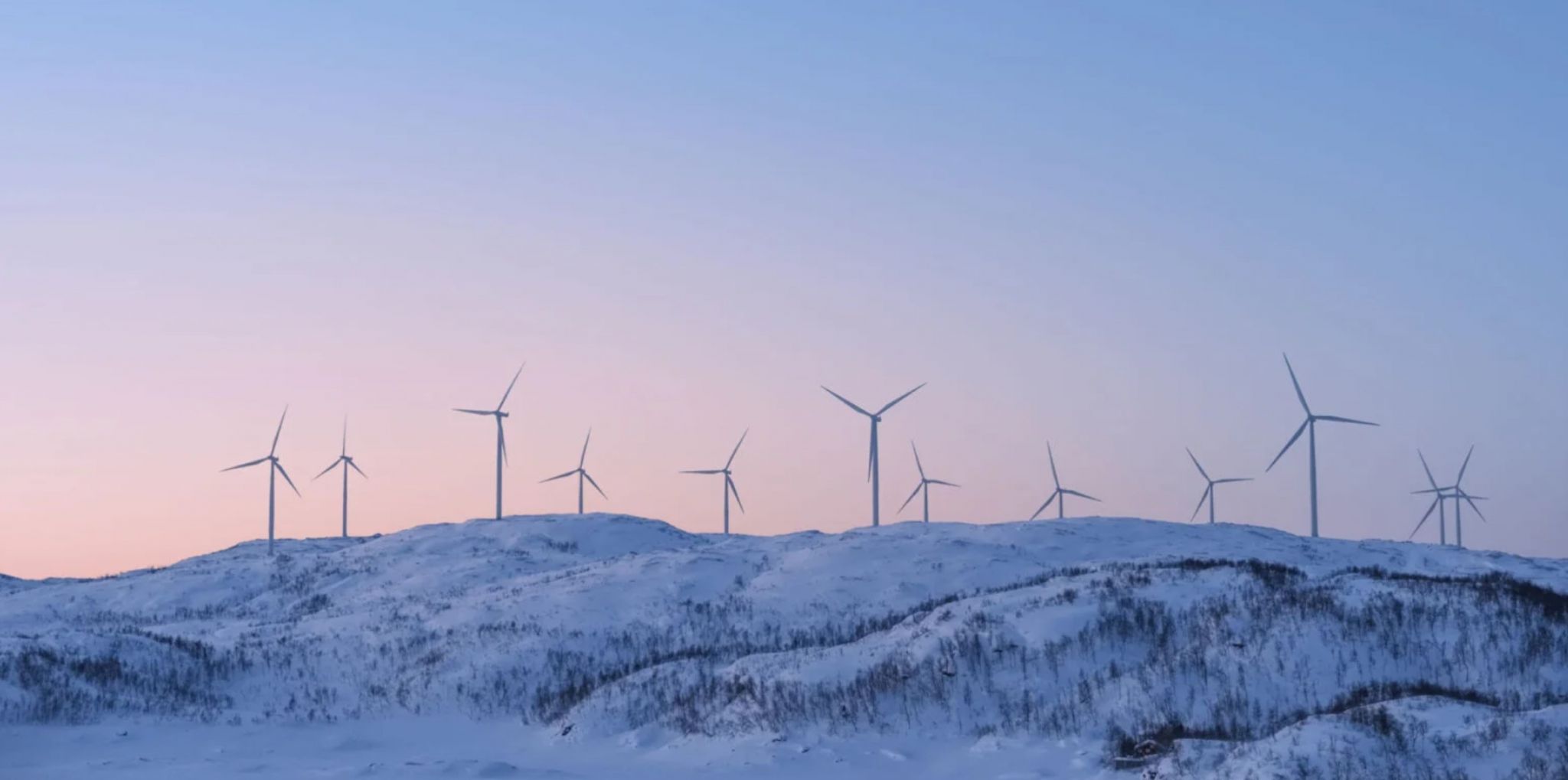
Energy transition is not an abstract climate ambition; it is a security issue. Diversifying energy resources, including renewables, across Latvia reduces vulnerability – to Russia’s aggression, global price shocks, climate impacts and to critical infrastructure. Hydropower, wind in Kurzeme, bioenergy in rural municipalities and decentralised solar, combined with established energy sources, form a balanced system that safeguards households, public services and the national economy.
One of the defining features of the Nordic approach is the clear understanding that community engagement is a prerequisite for energy affordability and system reliability. Energy transition, while necessary, reshapes territories and local economies; without early, fair and structured involvement, resistance and delays are predictable. Nordic experience shows that integrating local knowledge and concerns from the beginning is not a symbolic participation but a strategic choice that lowers risk and delivers durable outcomes.
Community engagement and actionable steps for energy affordability and reliability
Progress towards affordable and reliable energy systems depends less on public attitudes in general and more on how local concerns are handled in practice. Several critical questions emerge.
Why are local communities often against energy projects (NIMBY)?
Opposition to renewable energy projects is often grouped under the label “Not in My Backyard” (NIMBY), yet this term obscures the substance of local objections. These typically relate to concrete issues such as land use, visual and noise impact, perceived effects on property values, environmental disturbance and, critically, the sense that decisions are taken elsewhere and imposed locally without consent and fair compensation. Addressing such concerns requires clear procedures, transparency, incentives and credible guarantees, not technical arguments alone.
What role do municipalities play and where are the capacity limits?
Municipalities play a decisive role in this process. As the point of contact between national policy and local implementation, they carry responsibility for spatial planning, dialogue with residents and coordination of projects on the ground. Where municipal capacity is limited – whether in expertise, funding or time – projects face higher risks of delay or rejection. Strengthening local administrative capacity and providing clear mandates is therefore central to effective energy deployment.
Where does the gap between policy planning and local action arise?
A further challenge lies in the disconnect that can arise between national planning and local realities. National energy strategies are necessarily broad, but they fail when they overlook local infrastructure constraints, social dynamics or cumulative impacts. Closing this gap requires adaptable policy frameworks and mechanisms that allow local input to influence outcomes, not just to endorse them.
How does citizen engagement act as the “glue” of the energy trilemma?
Citizen engagement underpins the energy trilemma of security, affordability and environmental sustainability. When communities are involved in shaping solutions, they are better positioned to understand trade-offs and support long-term investments. Nordic experience shows that structured engagement, fair compensation and regulatory clarity are not concessions, but instruments that increase predictability and social licence for energy infrastructure.
What did the Nordics learn from practice?
The Nordic experience offers concrete, non-ideological mechanisms: Denmark’s ProjectZero in Sønderborg shows how public-private cooperation and citizen involvement can deliver 100% CO₂-neutrality by industrial symbiosis at municipality level. Denmark’s property value compensation framework protects homeowners near wind turbines. Cross-Nordic carbon pricing embeds climate costs into markets. Finland’s Hinku Climate Network empowers municipalities. Nordic power-first data centre strategies align clean energy with industrial growth. Norway’s reopening of wind concessions highlights the cost of weak engagement. Iceland’s land restoration demonstrates long-term cultural change. Fast-track data centre permitting in Sweden and Finland reduces administrative barriers while reinforcing energy systems.
Why does citizen involvement in renewable energy matter?
Hydro, wind and solar are renewable resources derived from nature and widely perceived as common goods. Their production is often located in rural areas, while benefits accrue to urban centres and industry. Without fair governance, this imbalance may fuel resistance. A just energy transition therefore depends on clear rules, shared benefits and meaningful involvement of host communities. In the Nordic countries, values such as self-determination, co-decision and participation are fundamental elements of governance. These principles shape legitimacy, particularly where long-term land use is affected and indigenous or local rights are concerned. It is a difficult balance , however, while energy security and rapid deployment of renewable resources are urgent priorities, Nordic experience shows that durability depends on democratic legitimacy. Efficient energy systems require both.
How can citizen engagement in renewable energy be strengthened?
Experience across the Nordic region shows that technocratic, top-down procedures are often insufficient to secure public support, even where policy objectives are widely shared. When decision-making processes are perceived as distant or unfair, local opposition tends to intensify, leading to delays or, in some cases, the suspension of renewable energy projects.
Strengthening engagement requires governance models that treat local democracy and local ownership as assets rather than constraints. Renewable energy communities, cooperative ownership structures and early, structured dialogue can anchor projects locally and reduce or prevent conflict. While such approaches may extend planning timelines, they increase predictability and social legitimacy. As Dr. Kristian Borch, Senior Researcher at Ruralis, aptly puts it: “It may take a little longer, but the transition will be less conflictual and probably also more efficient in the long run.”
Denmark’s approach to onshore wind demonstrates how this works in practice. All onshore wind projects are subject to local approval and early public consultation. The option-to-purchase scheme guarantees local residents the right to buy at least 20 percent of the installed capacity, ensuring co-ownership and influences on the price schemes. Through the green fund scheme, developers make mandatory payments to municipalities, financing local development projects. Co-ownership loan guarantees reduce financial risk for citizens investing collectively, while neighbours within a defined radius receive a renewable energy bonus linked to turbine production. In parallel, the property value compensation framework protects homeowners by compensating verified value loss and offering a right-to-sell option. Together, these instruments shift the logic from tolerating infrastructure to benefiting from it, enabling a transition from NIMBY “Not in My Backyard” to PIMBY “Please in my backyard” based on transparency, shared value and legal certainty.
Conclusion
Debates around energy infrastructure often invoke the protection of nature, yet they rarely acknowledge the scale of the trade-offs involved. While renewable energy projects can have local and temporary environmental impacts, failing to expand wind, hydro, biogas and solar capacity carries far greater long-term risks – for ecosystems, societies and economies alike. Inaction is not a neutral choice.
Without new energy infrastructure, the environmental costs of climate change will be deeper, broader and irreversible. The Nordic experience shows that navigating these trade-offs successfully depends on how decisions are made, not only on what is built. Citizen engagement is not an optional addition to energy policy; it is a core condition for delivery. Where communities are involved early, where municipalities are empowered, and where benefits and risks are shared fairly, acceptance follows.
As the Nordic Council of Ministers’ Office in Latvia continues its work, it will strengthen the energy pillar across the entire country – from Kurzeme to Latgale, from Zemgale to Vidzeme. The Nordic-Baltic experience offers a clear lesson: resilient energy systems are not imposed on communities; they are built with them.
Author: Nina Hvid Enevoldsen, Director
Article published in Issue No 5 of the Magazine "Enerģija". Full digital version of the Magazine "Enerģija" No. 5 is available here.